
Blog post

From dirt and weeds to an attractive native grass landscape

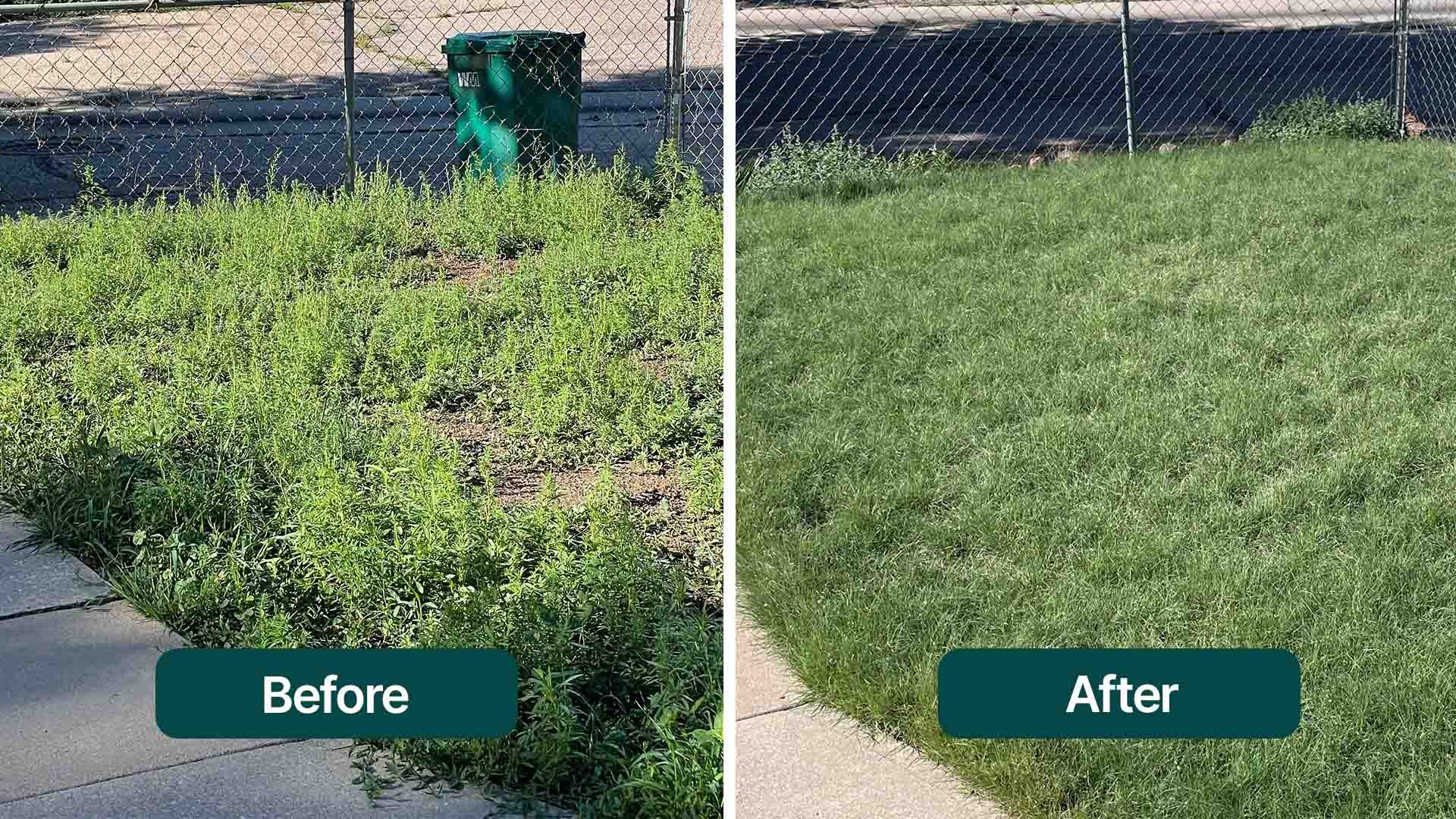
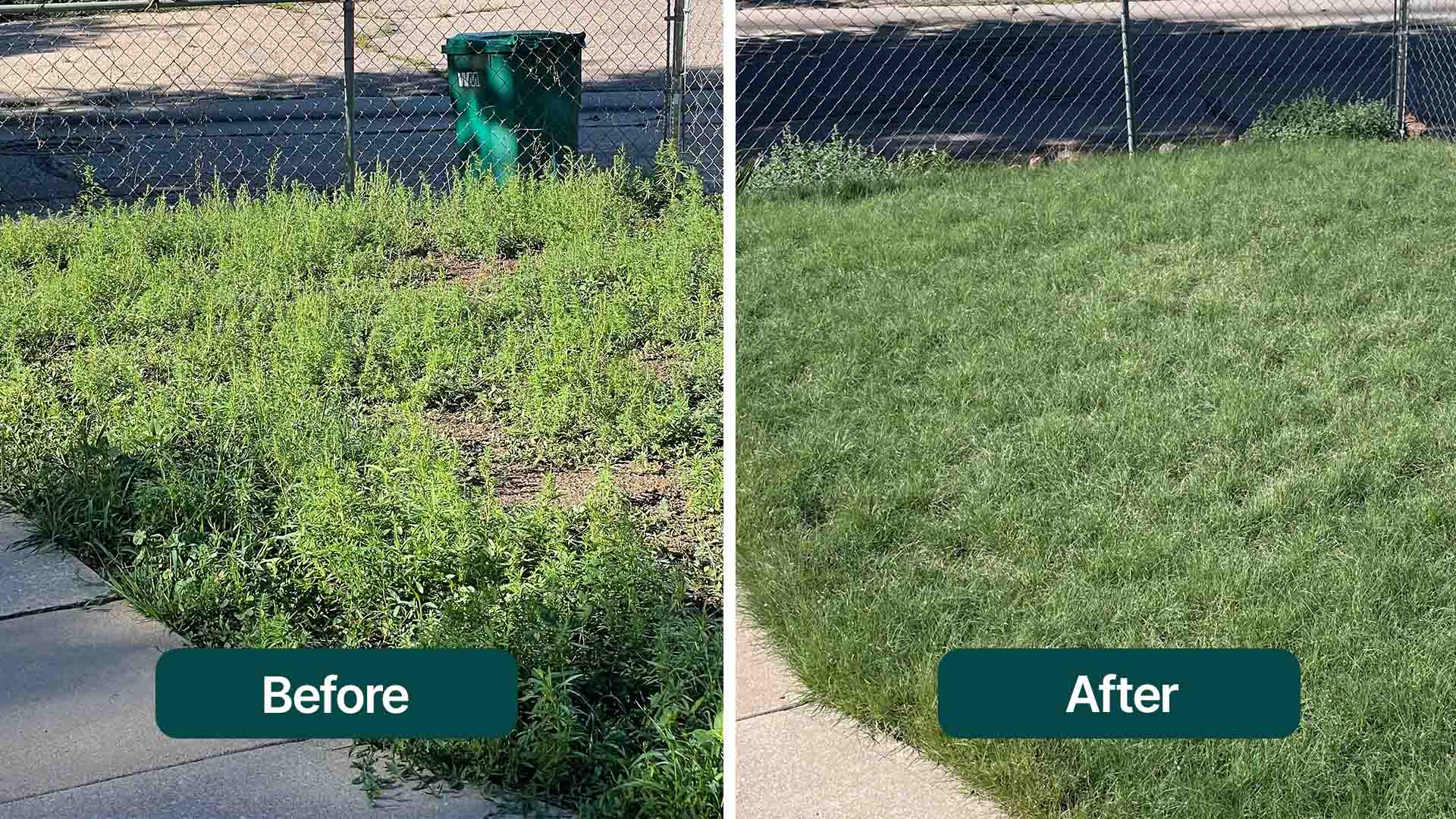
Before-and-after comparison of an overgrown, weedy yard transformed into a dense green buffalograss lawn.

Melissa and Joshua's yard in 2024 and in August 2026.
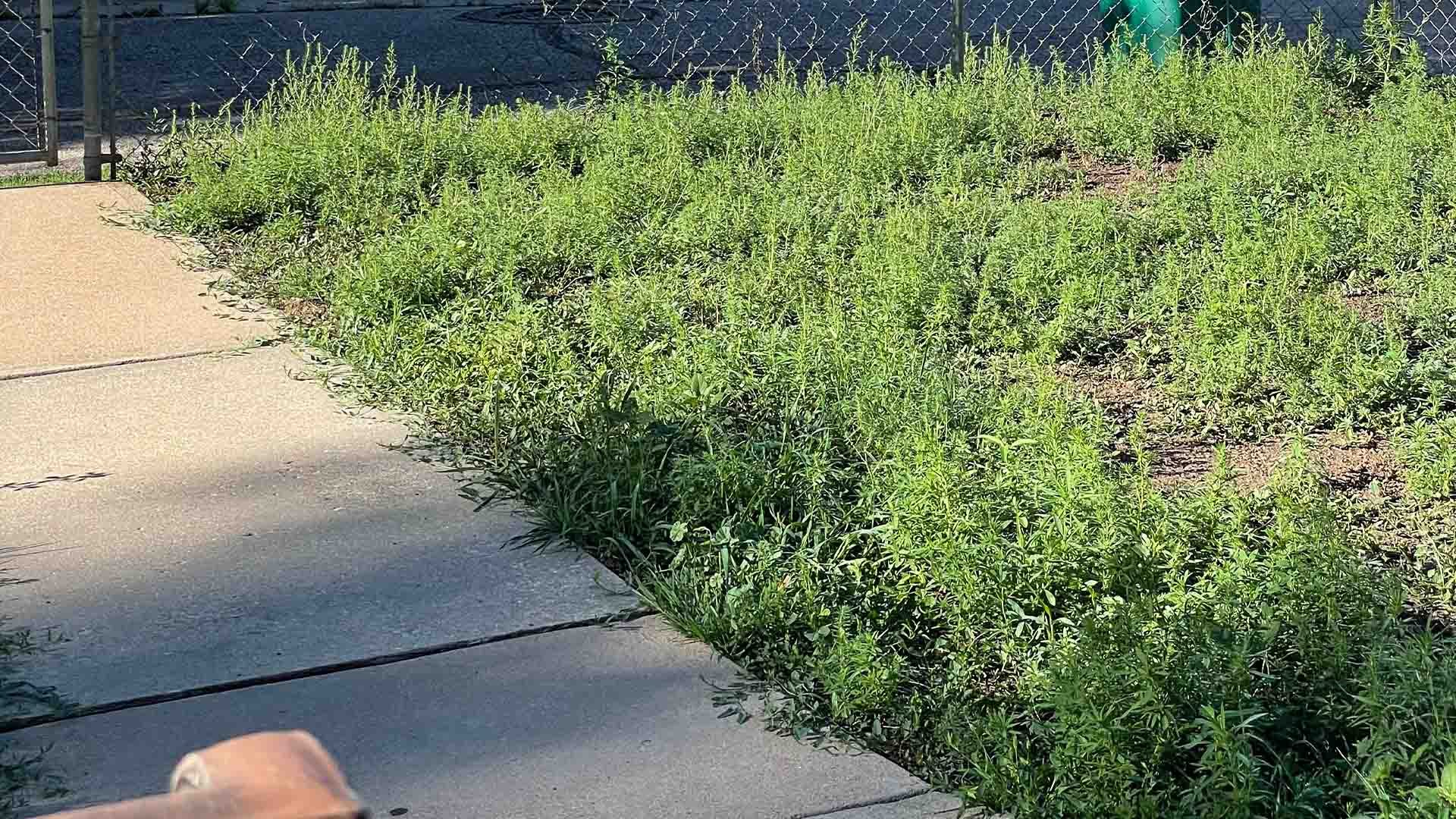
A small patchy yard overgrown with weeds next to sidewalk.

The yard was filled with weeds in August 2024.
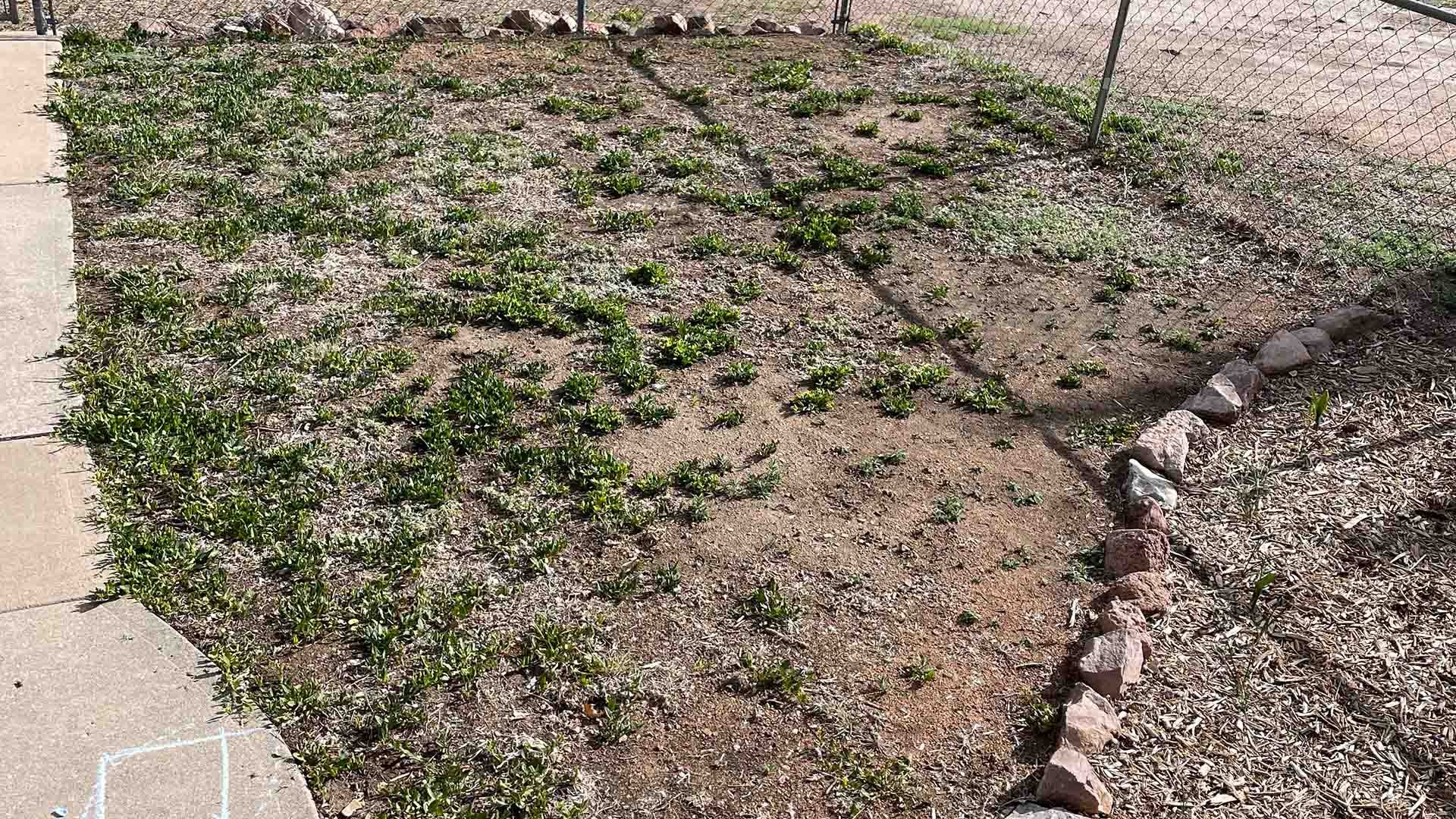
Sparse yard with weeds and large patches of bare soil. There is a concrete walkway on the left and rock border along a garden bed.

May 8, 2025, before any preparation work.
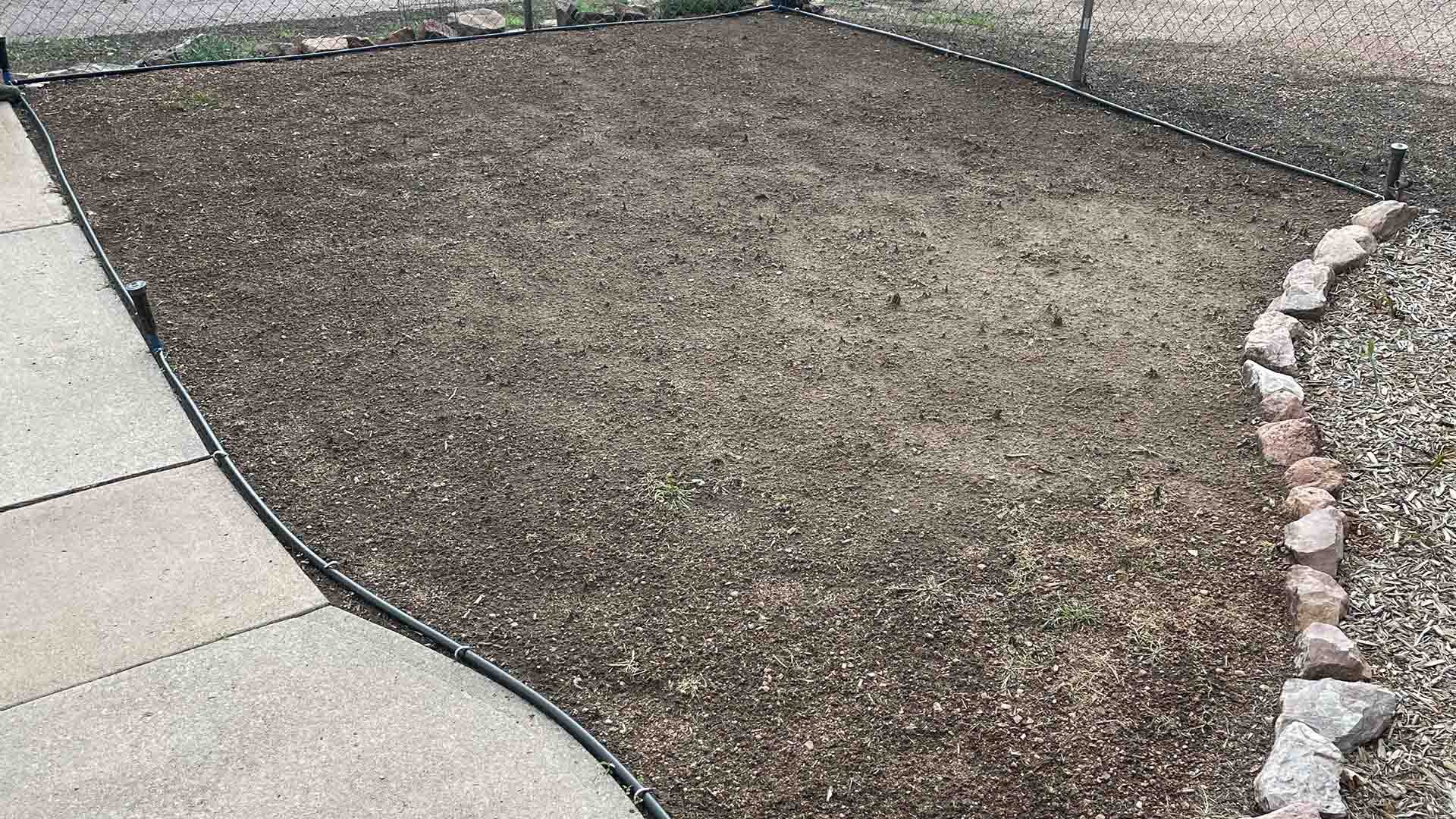
Newly prepared buffalograss planting area covered with soil and compost material, with no visible vegetation.

June 15, 2025: The couple prepped the site with a non-selective herbicide and removed the dead weeds before seeding with native grass. They also installed above-ground temporary irrigation to help establish the new lawn.
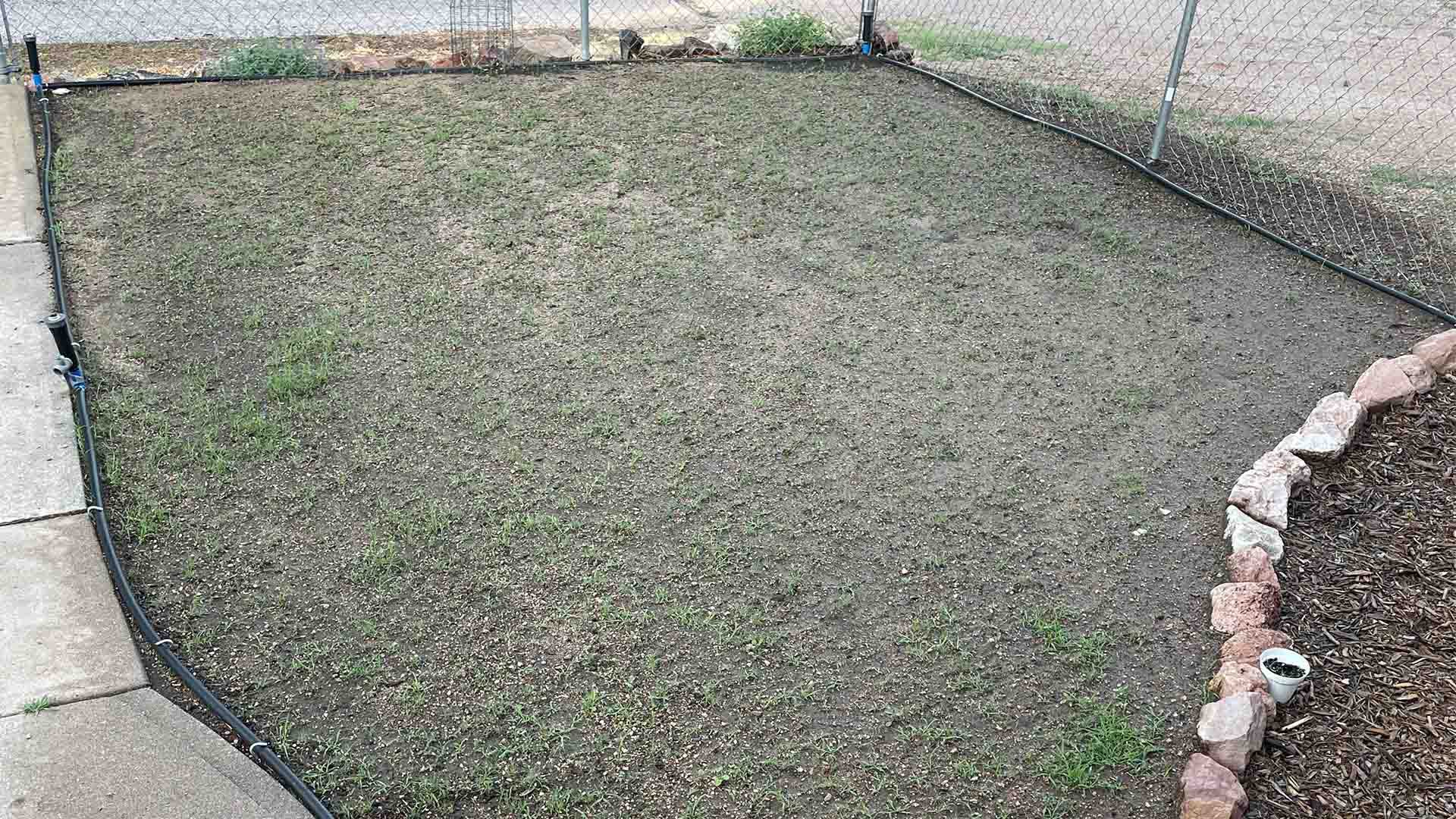
Early establishment of buffalograss seed, with small green shoots popping up across the soil surface within a fenced lawn area.

July 11, 2025: Less than 20 days after seeding the site, grass had begun to emerge.
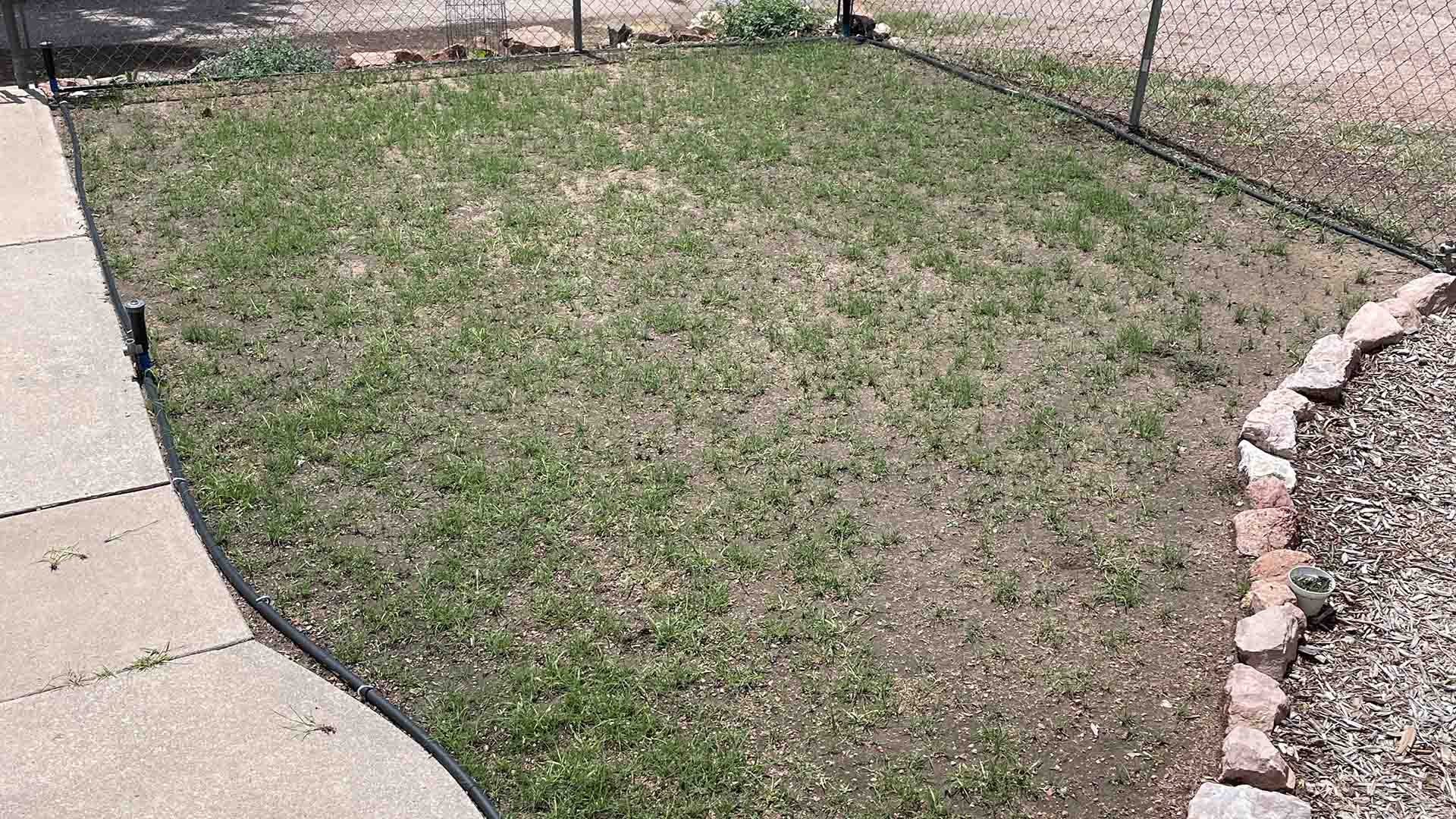
Developing buffalograss lawn with thin green coverage beginning to spread across previously bare soil.

The new grass was filling in by July 21, 2025.
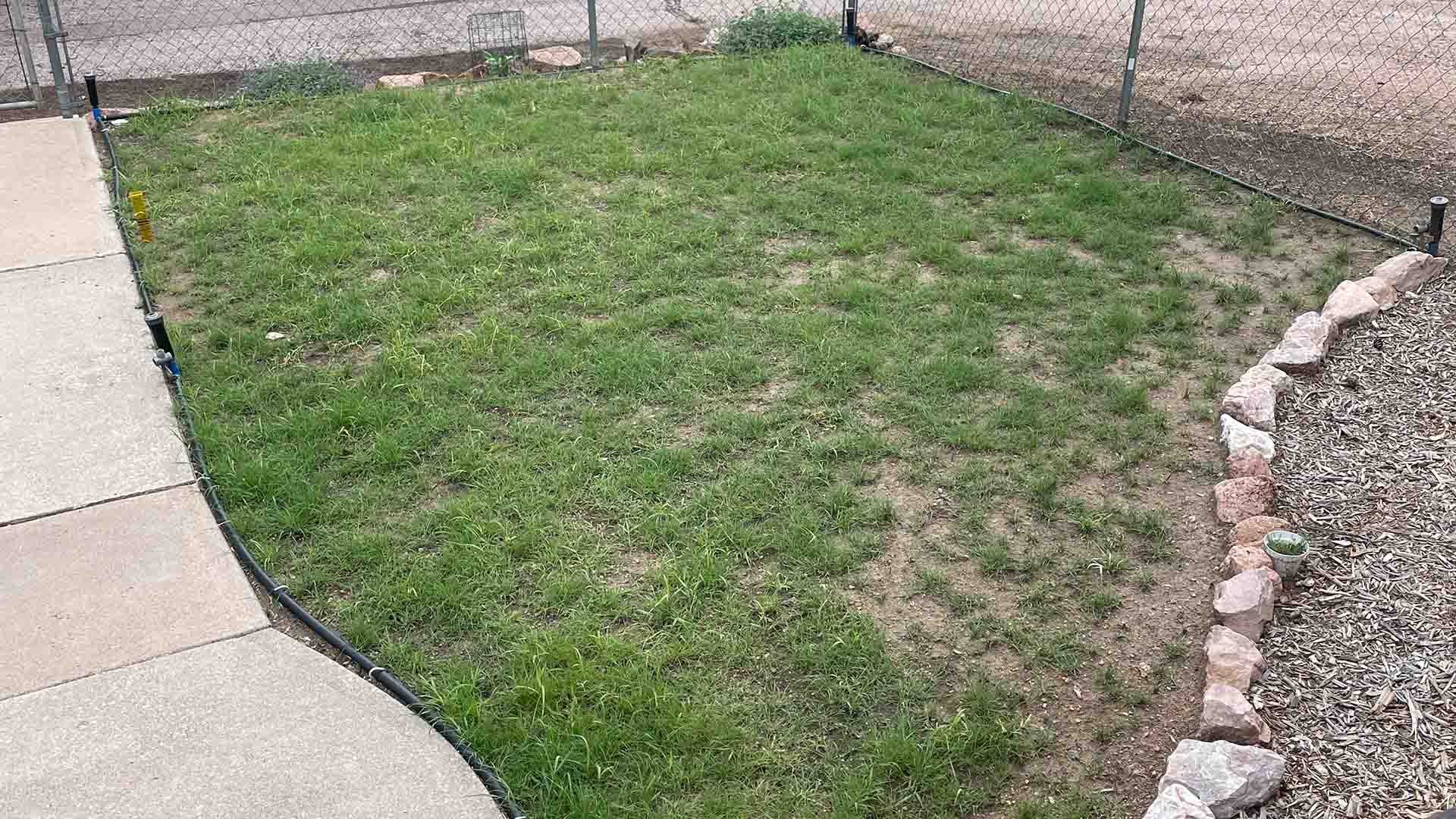
Young buffalograss lawn showing increased green growth with patchy coverage and patchy visible soil areas as it fills in.

By July 31, 2025, the grass was mostly filled in. Melissa and Joshua kept the site clear of weeds by hand-weeding.
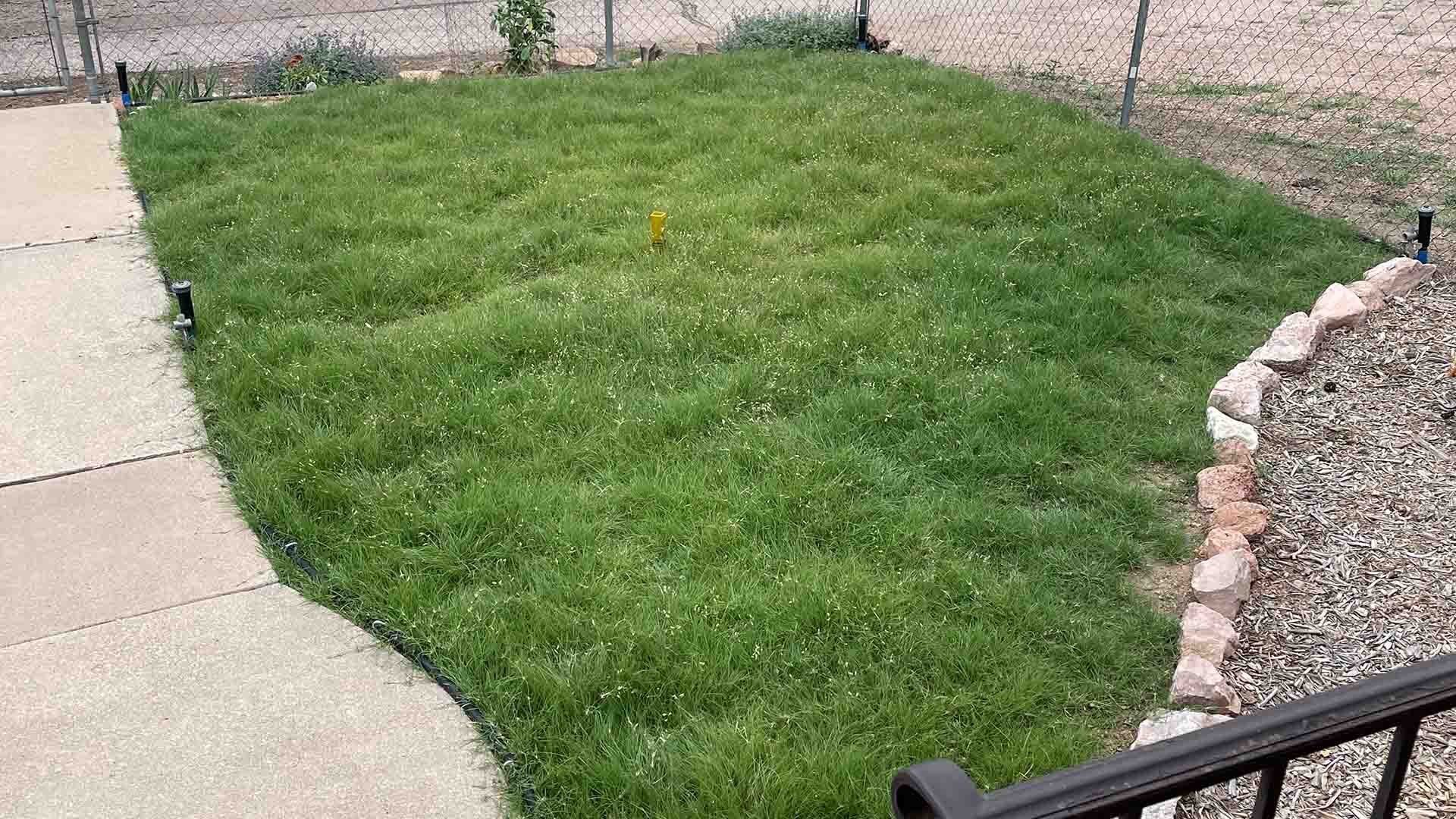
Green, long lawn that has yet to be mowed. The length of the grass is uneven, but healthy.

On Sept. 12, 2025, the lawn was lush and ready to mow.
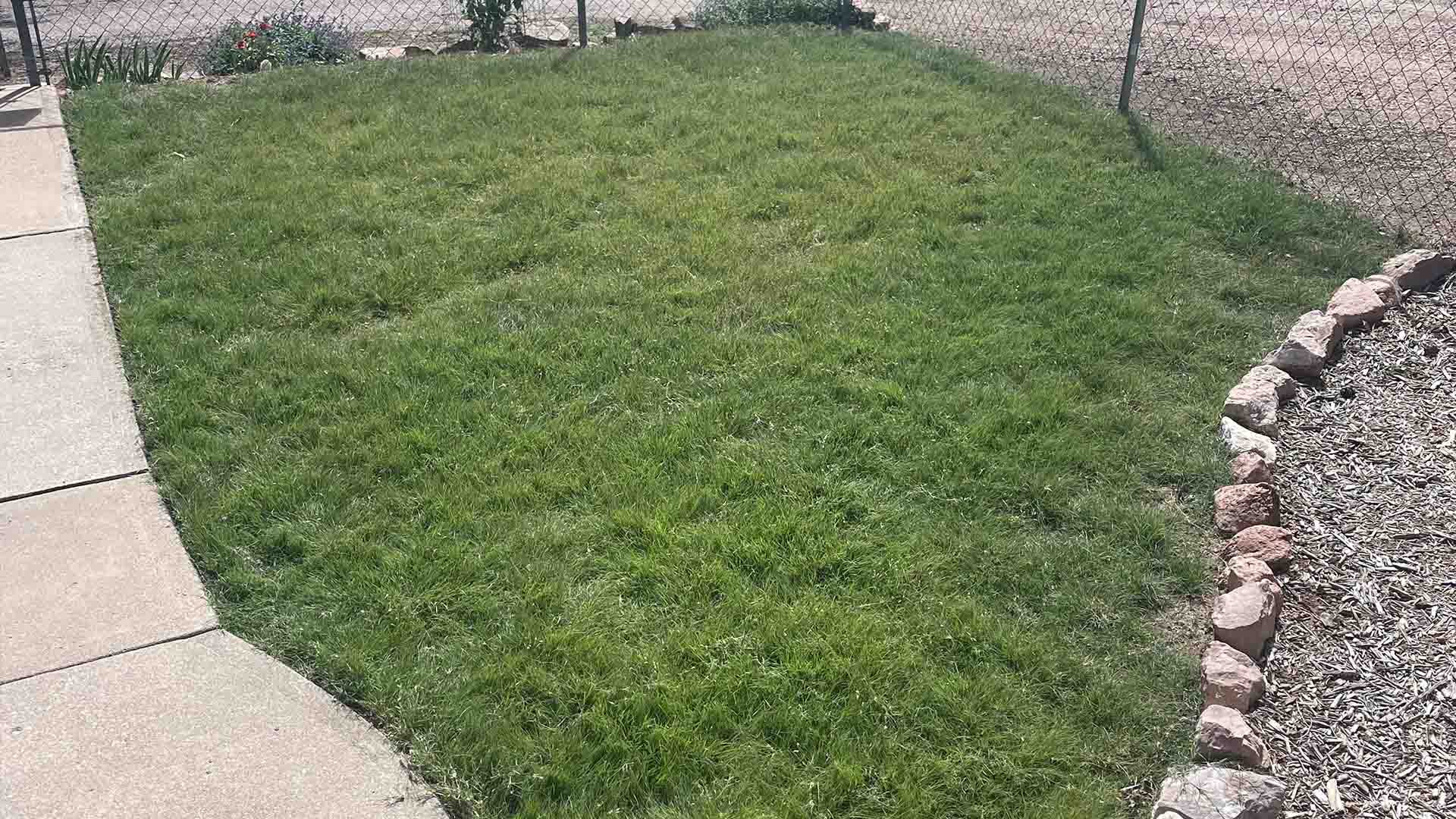
Fully established lawn with dense green turf and uniform coverage across the yard.

After the first mow on Sept. 21, 2025.
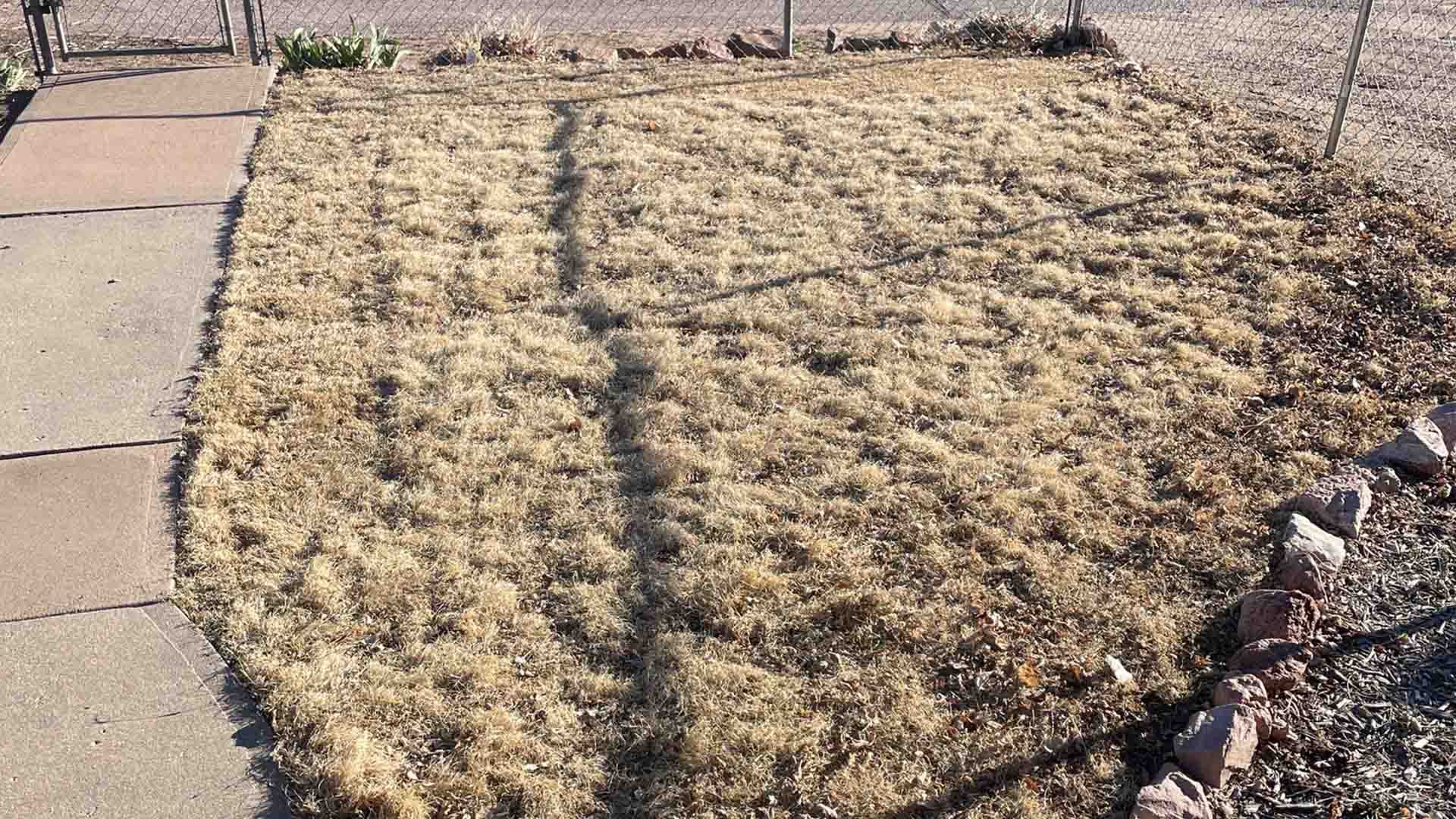
Dormant yellow/tan lawn grass. There are visible shadows cast across the turf.

Photo taken March 18, 2026 before spring mowing.
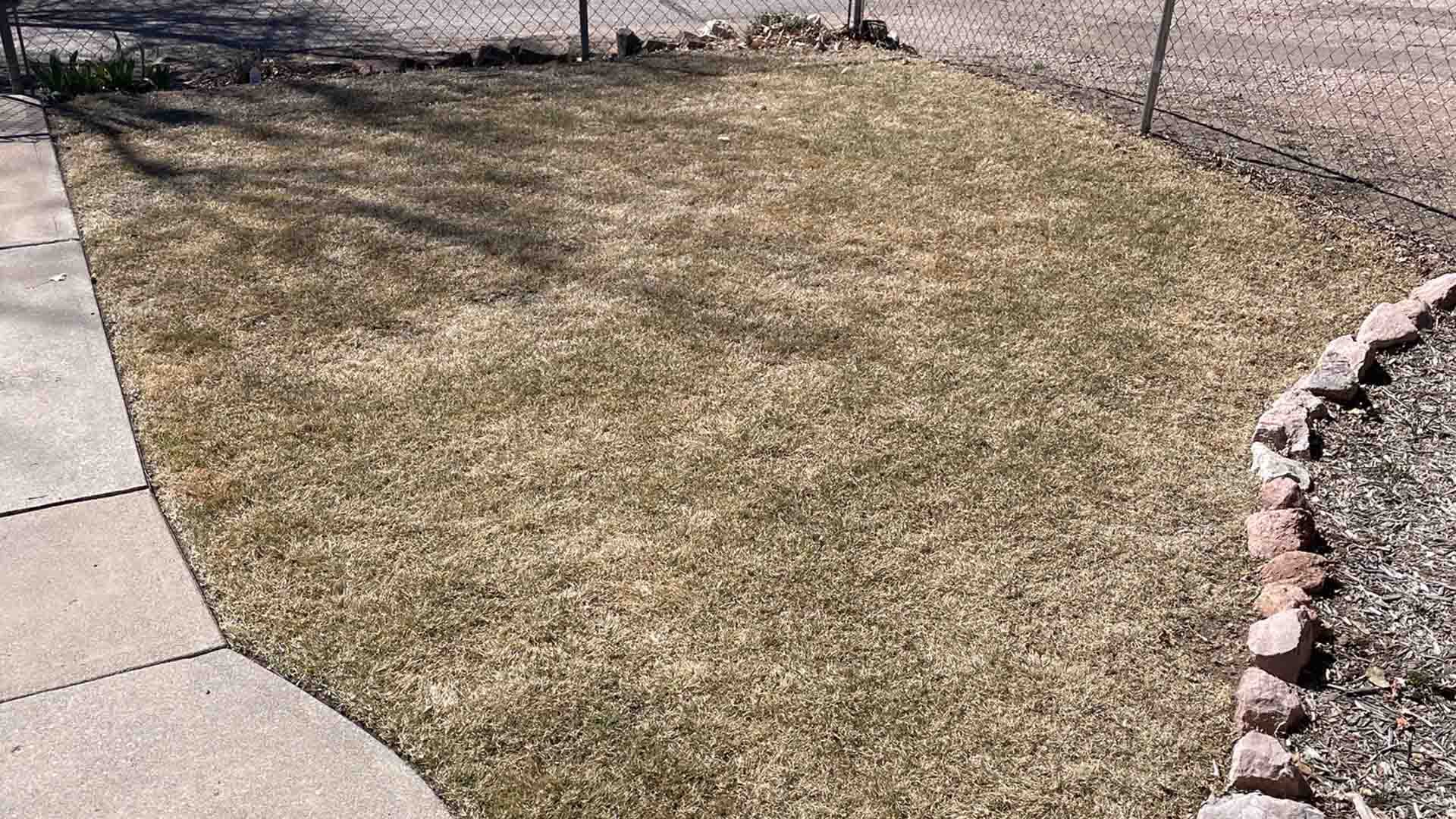
Newly mowed dormant lawn displaying a uniform tan color in winter.

After the first mow on March 19, 2026.
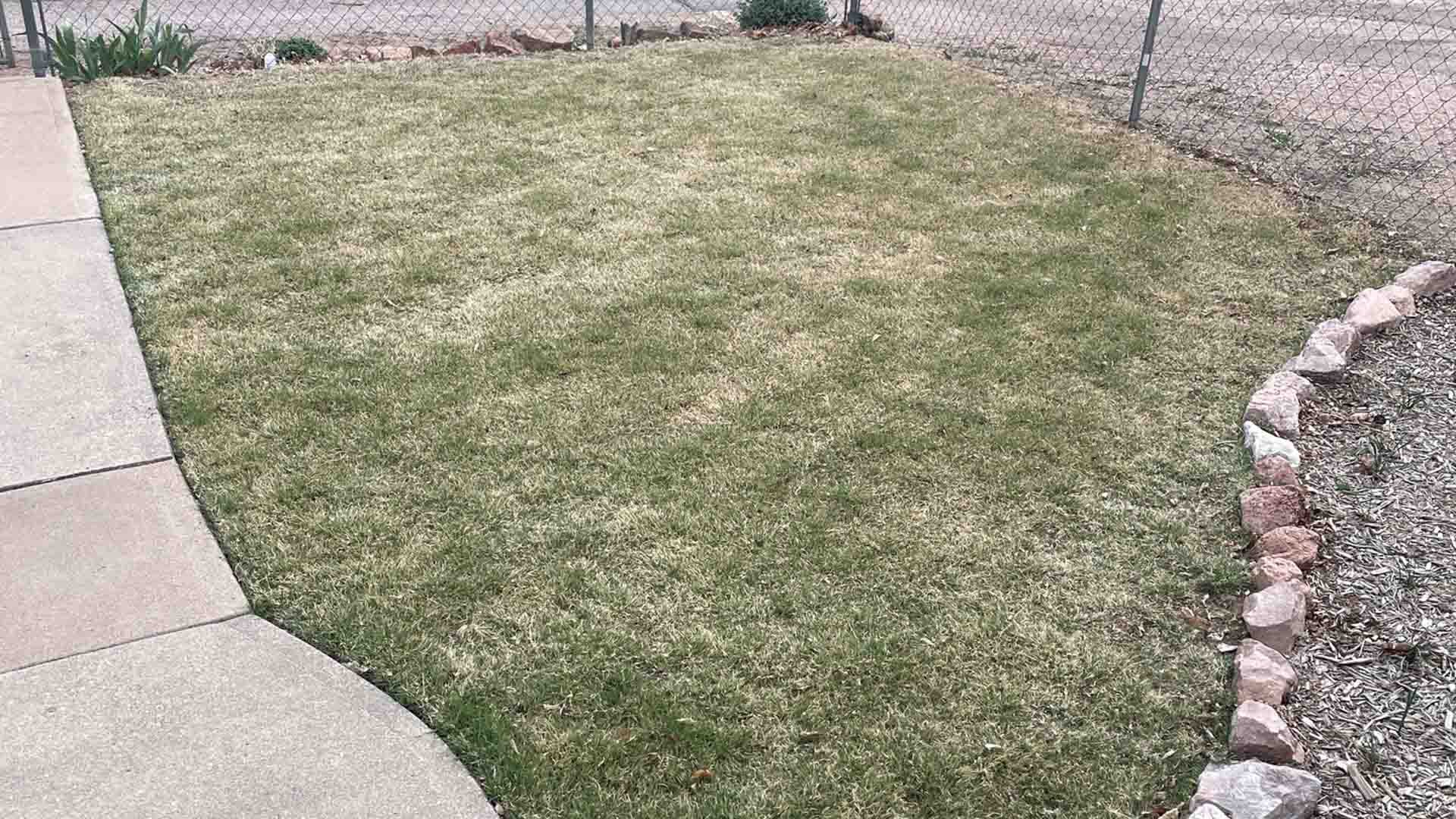
Buffalograss lawn transitioning out of dormancy, showing a mix of green and tan grass across the turf area.

March 29, 2026: The lawn starts responding to warmer weather.
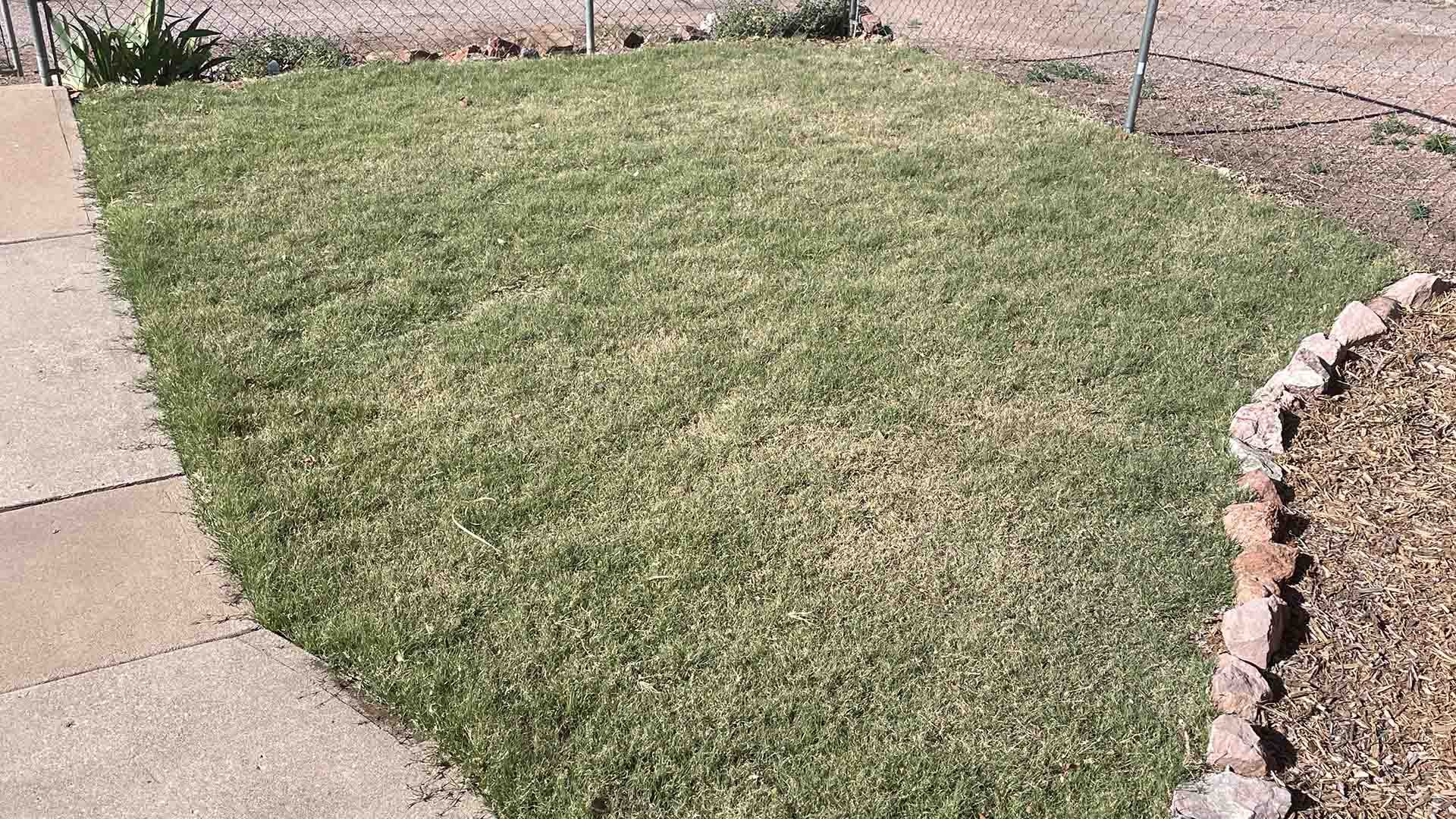
Buffalograss lawn transitioning out of dormancy, showing a more green than tan grass across the turf area.

The lawn was mostly awakened from winter dormancy by May 15, 2026.
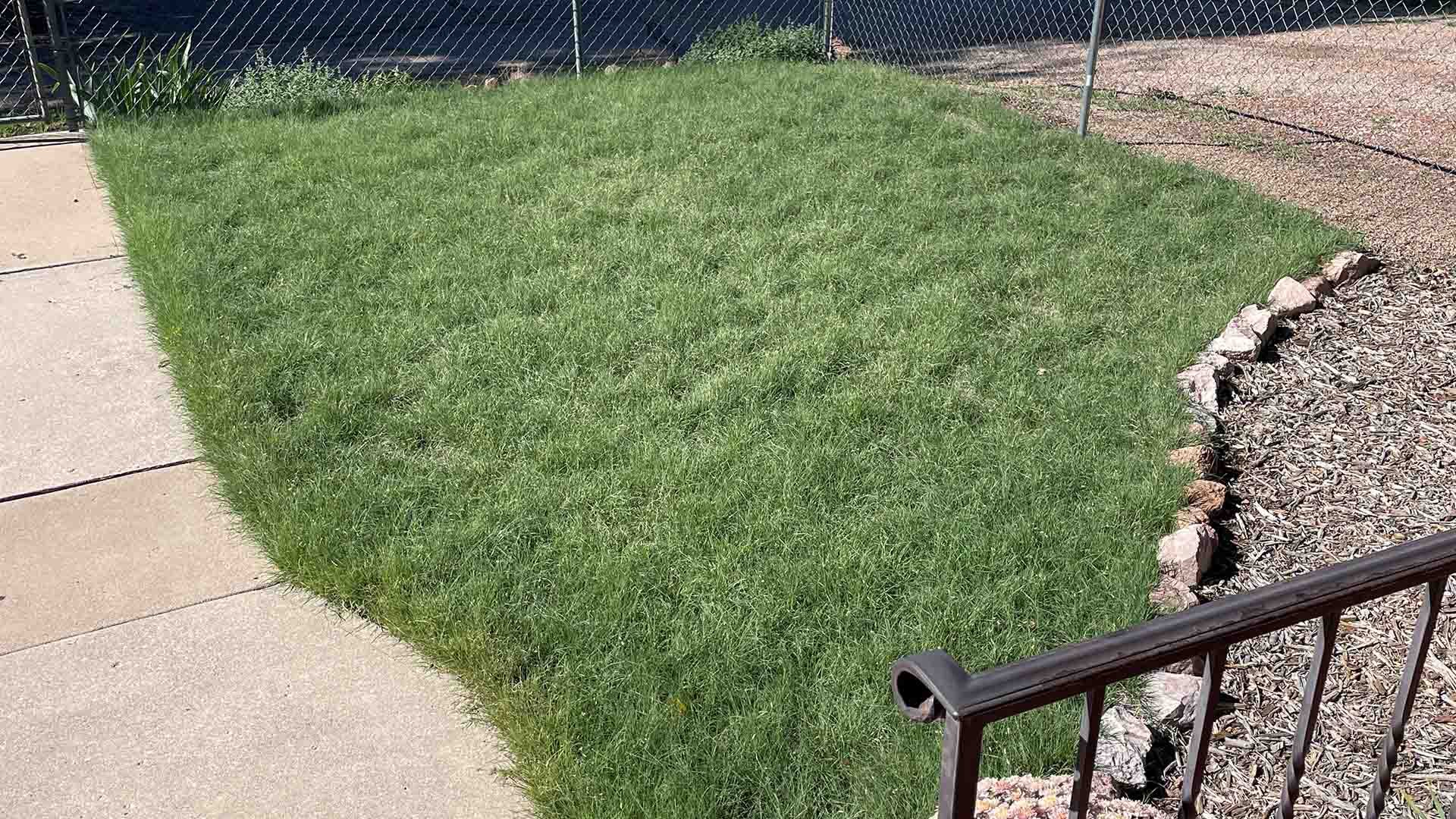
Healthy buffalograss lawn with long, dense green coverage and a natural appearance.

Melissa and Joshua's native grass performed well during this year’s dry weather and above-average summer temperatures. It now requires only one to two days of watering a week.

Melissa and Joshua M. took part in our Native Grass Lawn Program for homeowners in spring 2025 and began their landscape conversion that summer.

Says Melissa: "We had the best time learning and transforming our yard. Thank you for hosting this program and all your support. We are so happy to be transforming our neglected, weed-ridden front yard into a native, manageable area we can be proud of."

The images and captions above explain the progression of their yard from weeds to an easy-to-maintain, low-water lawn that adds value and vibrancy to their home.

You can see different native grasses in use, as well as other landscape choices that do well in Colorado Springs, at our Water Wise Demonstration Garden at the Conservation and Environmental Center, located at 2855 Mesa Road. Our expert staff can answer questions and help guide you toward a Water Wise landscape that best fits your lifestyle. They are available Monday-Friday, 8 a.m.–5 p.m. or call to schedule an appointment: (719) 668-8232.

Registration for our next native grass lawn program opens in April 2027.