


“” background image gradient

Plug-in solar energy

State law now allows Colorado residents to use small solar power systems that are designed to plug directly into a standard wall outlet.

These systems are also called “balcony solar” or “patio solar" because they allow panels to be placed in smaller spaces where rooftop solar may not be practical.

System designs can vary, but most systems consist of a solar panel, an inverter[tooltip text="Inverters convert direct current (DC) electricity generated from a solar panel to alternating current electricity (AC). AC electricity powers our homes and devices."] and a cord that connects to a wall outlet.
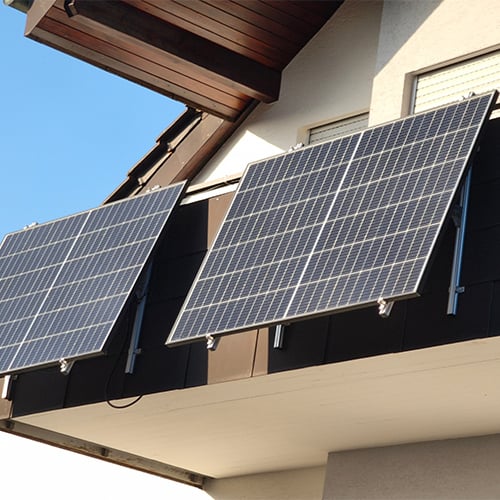
Two solar panels mounted to a balcony on a modern single-family home.Benefits of owning a plug-in solar system

  • Helps offset a portion of your home's electricity use with clean, renewable energy.
  • Can be installed in small spaces, making solar power more accessible for renters.
  • May help reduce monthly utility costs.
  • Allows customers to generate some of their own electricity without the cost of a rooftop system.
  • Provides a simple way to explore residential solar generation before investing in a larger system.

Safety considerations

When purchasing a system, it must meet all national safety standards to reduce the risk of electric shock or a fire.

“”

Avoid electrical shock

Without proper safety features, it's possible the panels will send electricity to the plug after it's been removed from the outlet. To reduce this risk, follow these steps:

  • After unplugging, pause to ensure the system is fully de-energized.
  • Avoid plugging your system in to loose outlets. Ensure the connection is tight and the plug is secure in the wall outlet.
  • Make sure the plugs on your system have three prongs.
  • Inspect electrical cords for any damage. Safely shut down the system and replace damaged cords if you notice exposed wires.

“”

Avoid fires

It's important to take precautions to avoid overloading circuits, which can cause a fire.

  • Avoid using appliances that draw a large amount of power on the same circuit as your plug-in system.

  • On its own, your circuit would normally trip if it's overloaded. Circuits are designed to sense that it's drawing more power than it should. If your plug-in system supplies more power, the circuit might not break if it's overloaded, increasing the risk of a fire.
  • If your plug-in system also delivers more electricity than your wiring or circuit breakers can safely handle, it's a fire hazard as well.

  • As your system generate more watts of electricity, it's becomes more important to use a dedicated circuit to avoid problems.

We suggest talking to a licensed electrician if you plan to install a system that generates more than 391 watts.

Rules & requirements

Only one system may be connected per electric meter. Additional systems feeding onto one meter are not allowed.

All plug-in solar systems must:

  • meet national safety standards and must be listed by a nationally recognized testing laboratory.
  • automatically stop sending electricity to the grid during a power outage.
  • comply with applicable building and fire safety codes.

Under Colorado law, there are differing requirements for these systems based on their power output.

391 watts or less

  • These systems may be plugged into a standard home electrical outlet.

  • Springs Utilities does not require approval before installation or use.
  •  These systems are generally intended for plug-in installation and typically do not require an electrician or electrical permit

392 watts to 1920 watts

These systems must comply with local electrical and building code requirements.

Additional electrical work may require a licensed electrician and permits.

More than 1920 watts

These systems are not considered portable-scale solar generators under Colorado law.

They must follow standard solar interconnection permitting processes.

Colorado Springs Utilities does not require approval or charge a fee for qualifying devices. We are also not liable for any damage caused by these systems.

Questions & answers

Still have questions? We can help. Email us using the link below.

How many panels can I install?

It depends on the wattage generated by each solar panel and the total amount of electricity generated.

Remember, only one qualifying device is allowed per address.