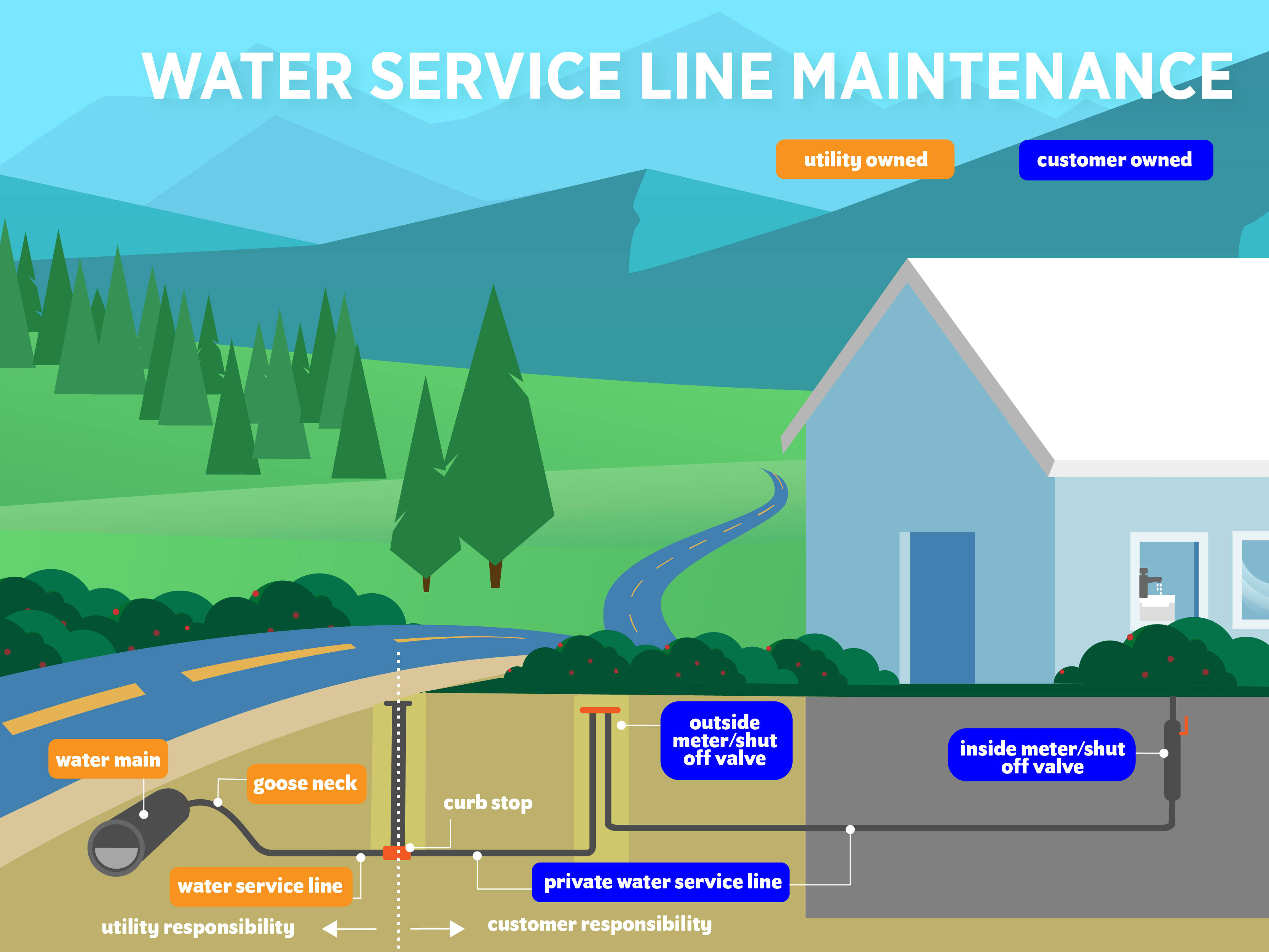
Your property is connected to our utility system through service lines referred to as private service lines.
We provide electric, natural gas, water and wastewater service to connection points on your property. We are responsible for maintaining the infrastructure on our side of these connection points. From there, it is your responsibility to maintain and repair your private service lines if they deteriorate or are damaged.
Service lines can break or leak for reasons such as:
Old age, wear and tear.
Tree roots growing into pipes.
Severe weather.
Digging or excavation on your property.
It’s important to repair damaged private service lines as soon as possible to ensure safe, reliable delivery of utilities services. Remember, if you plan to break ground around your home, please contact 811 before you dig.
You can check with your homeowner's insurance to see if they offer coverage for service line repairs. For low-income-qualified applicants, the City of Colorado Springs offers a Home Repair Assistance program.
Expand each section below to learn where your private service lines are located, safety tips and more.
Electric service line responsibility
Before doing any electrical work, remember that electricity is dangerous and any contact with a charged electric line can kill you.
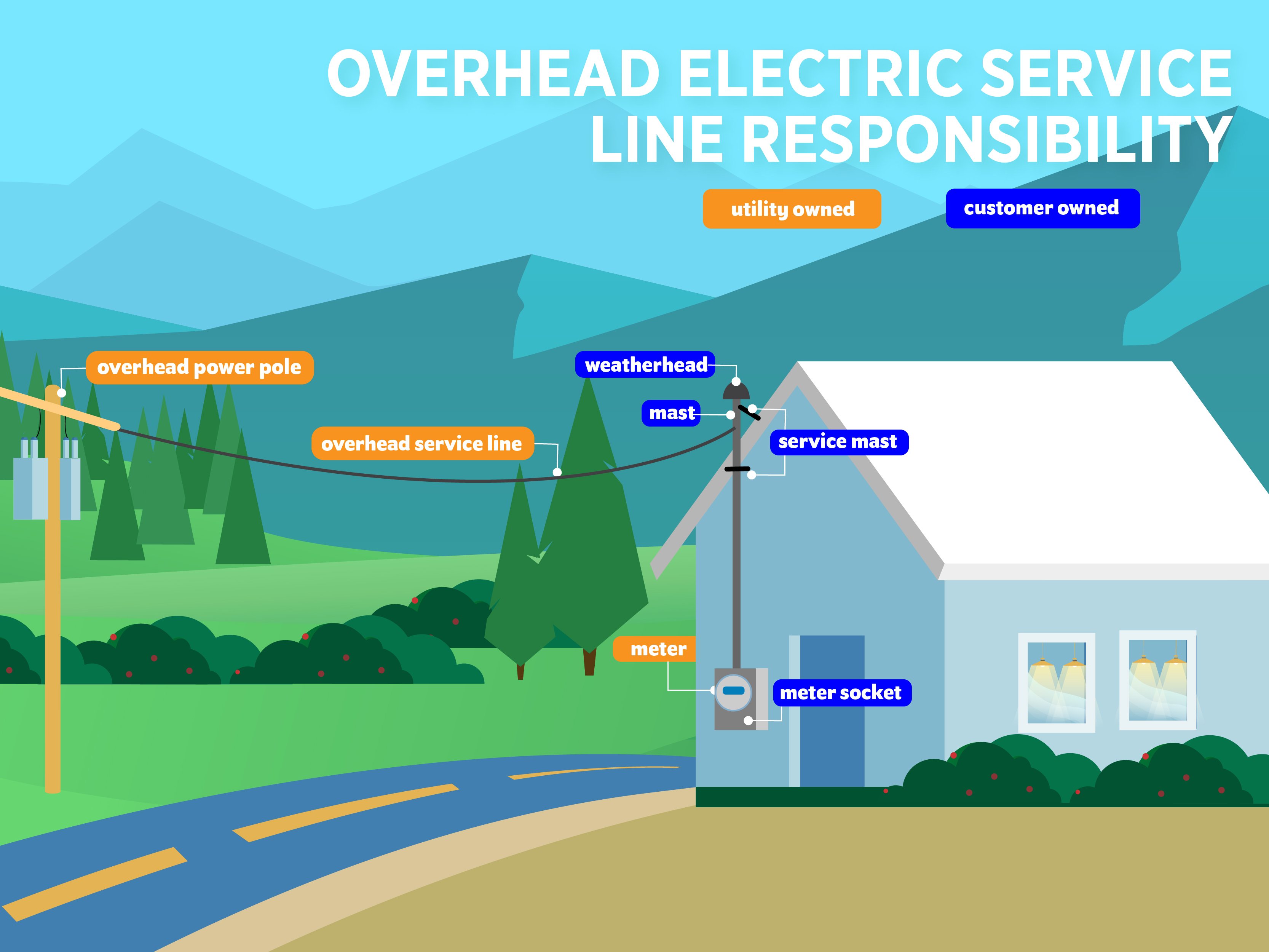
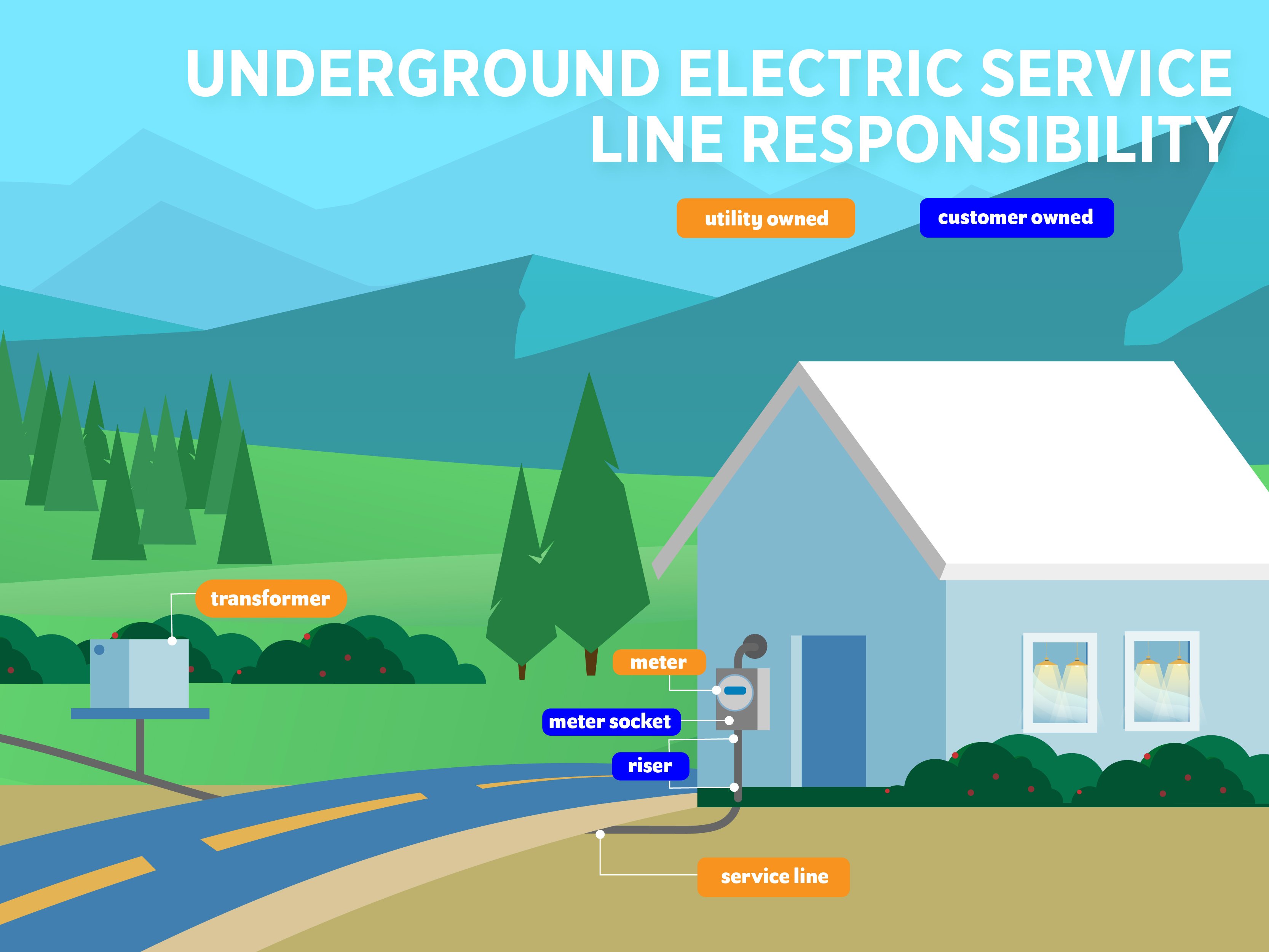
Your service line begins beyond the "point of common coupling," which is where our electric distribution lines meet your service line.
This means you are responsible for the following equipment:
Overhead Masts [tooltip text="A mast is a metal pipe or a tube attached to your roof near your meter that protects overhead electric lines near your meter."]
Meter sockets [tooltip text="A meter socket is the box that houses your electric meter."]
CT cabinets [tooltip text="A CT cabinet holds devices called current transformers (CTs). They help measure how much electricity is flowing through larger power lines and help safely reduce the amount of electricity flowing to the customer."]
Other common components of your home or business' electrical system include:
Secondary conduits [tooltip text="Secondary conduits are tubes used to house and protect wiring in a home or a business."]
Junction boxes [tooltip text="A junction box is an accessible container where electrical wires meet and connect."]
Breakers [tooltip text="A safety device that prevents surges in electricity from flowing to your home or business. These are typically installed in a metal box called an electrical panel or 'breaker box.'"]
Connectors [tooltip text="A connector is a component that joins wires together."]
Receptacles [tooltip text="A receptacle is an outlet that provide electricity to plug-in devices."]
CT cabinets & meter sockets (underground)
Install and maintain meter sockets and CT cabinets securely on framing members, positioned 5–6 feet above finished grade and away from low overhangs.
Underground installations are prone to rust or water damage. This can affect meter accuracy or cause shorts.
Poorly secured wiring can lead to overheating or intermittent power issues.
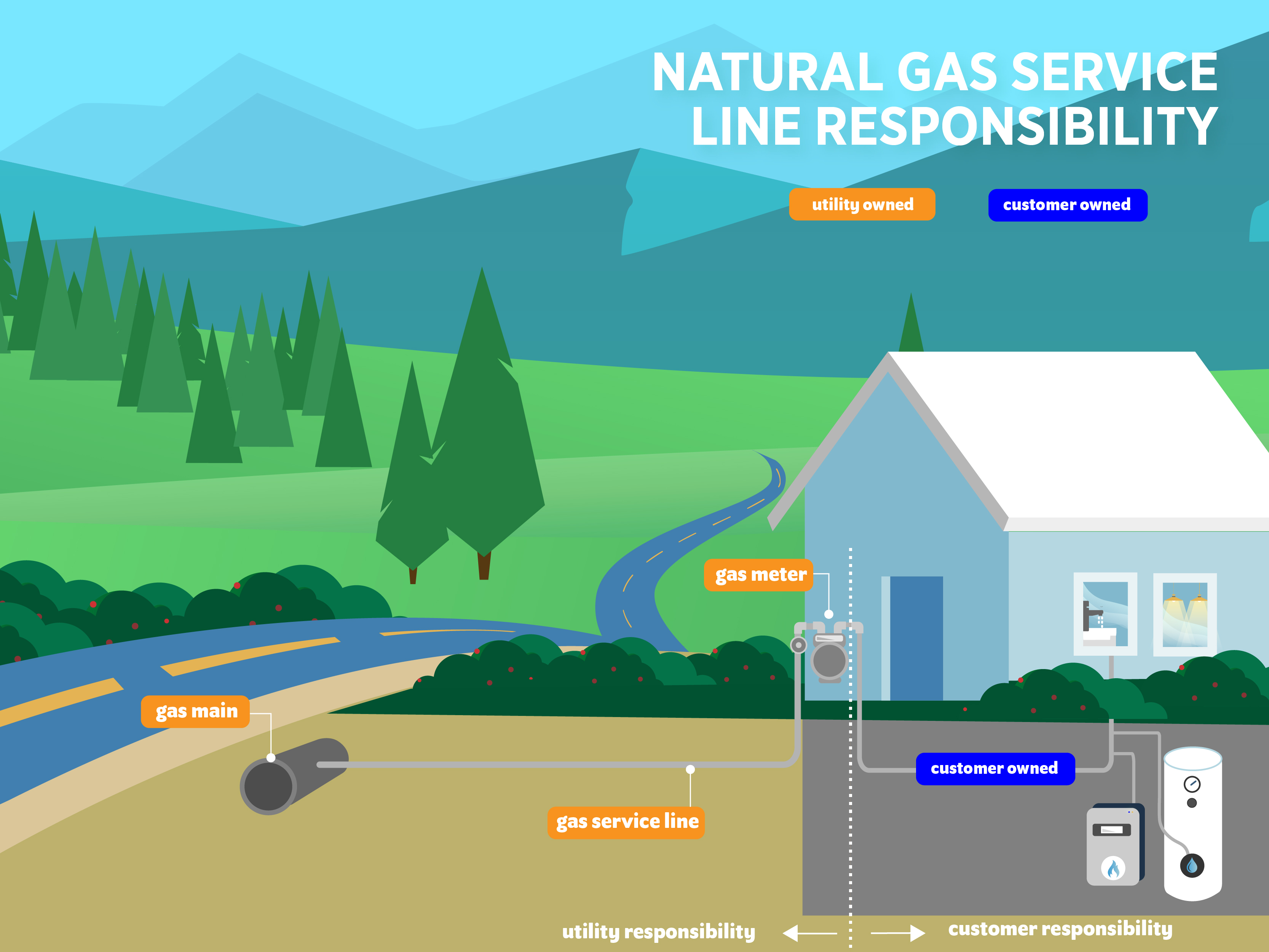
You are responsible for maintaining all natural gas lines beyond the meter, including those leading to and inside your home or business.
The portion of your line that is your responsibility could be buried, but basic maintenance and repairs are still necessary. Without proper maintenance, the line could corrode or leak. We recommend the following for customers with underground service lines:
Periodically inspect lines for leaks or corrosion if the piping is metallic.
If you discover damage, hire a licensed contractor to make repairs.
If you want to change the layout of your natural gas line, you may request to have it reconfigured. However, you will be responsible for covering all costs related to the work. Once the reconfiguration is complete, we’ll take over maintenance of the buried natural gas service line.
Just like you, we perform routine leak and corrosion inspections on our natural gas lines. We complete these every three to five years - nearly 70,000 annually.
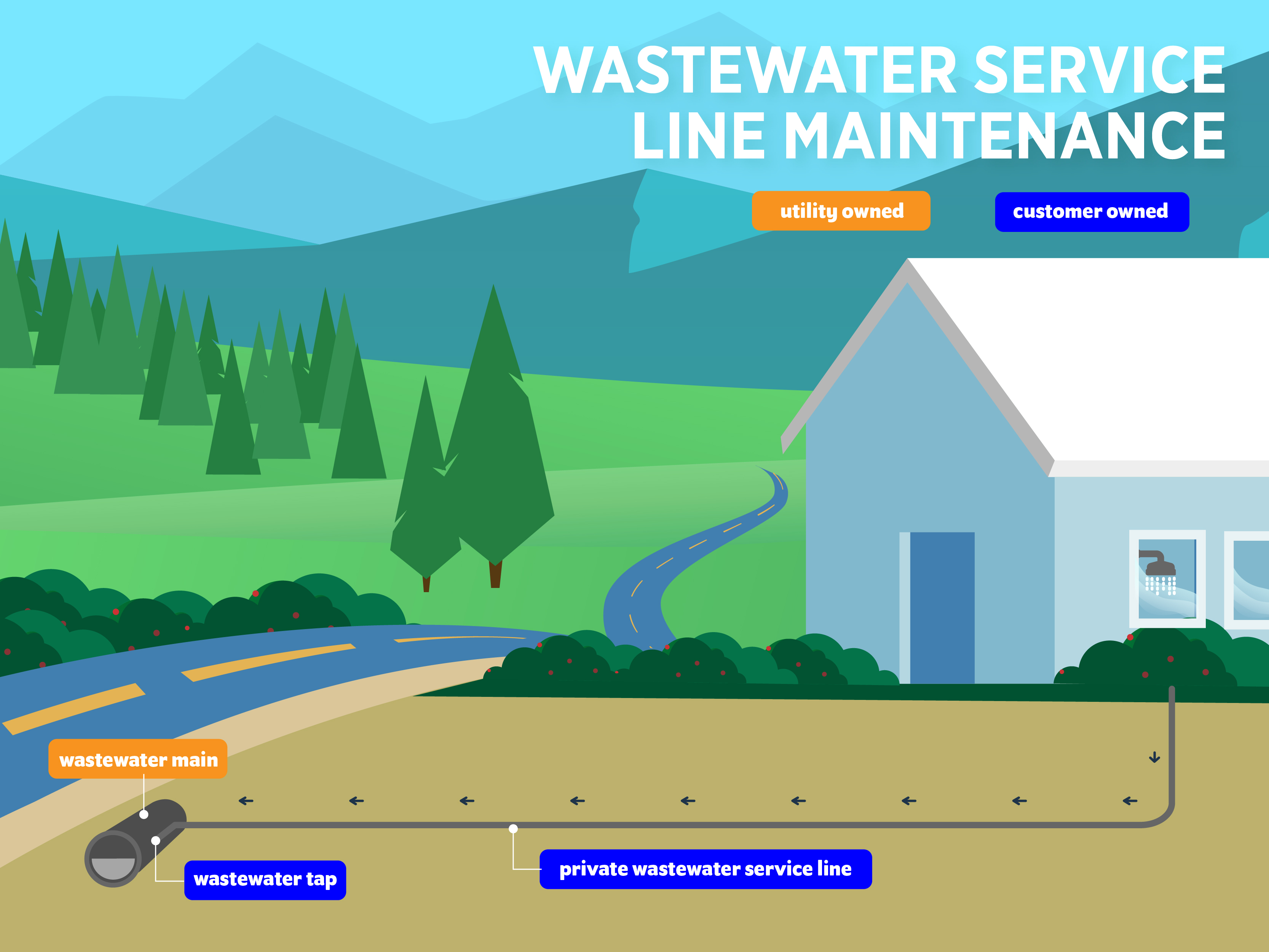
Wastewater service lines are most at risk from blockages caused by items that shouldn’t be put down the drain or flushed. Instead, throw fats, oils, greases and wipes in the trash to avoid costly and messy back-ups.
If your wastewater pipe is old or made from certain materials, it might crack. When that happens, roots from nearby trees or bushes can grow into the pipe looking for water. This can block your wastewater line and cause problems.
Roots can be temporarily removed, but if the pipe isn’t repaired or replaced, they will likely grow back again. We recommend hiring a licensed plumber to fix the issue. To prevent this from happening, avoid planting trees or shrubs over your wastewater line.
If you experience any of the following problems, please call us at (719) 448-4800 immediately:
A wastewater backup into your home or business.
A private service line break.
Sewage odor in your home or business.
We will respond to determine if the issue is in our wastewater main or your service line. If the issue is in the service line, it's the property owner's responsibility to arrange repairs.
Water line responsibility
Your water service line connects to our water main at a point called the curb stop. Depending on the year your home or business was built, the water service line on your property could be made of copper, plastic or galvanized steel.
A leak in your water service line will eventually saturate the area surrounding it and could erode soils or infiltrate property structures and cause damage. Large leaks can push water to the surface and create pooling. In cold weather, this water can freeze and make sidewalks or streets slippery and unsafe.
If you suspect you may have a water leak, first rule out these possible causes. If it appears the leak may be in your private service line, or we've notified you that a leak in your private service line was detected, you will need to call a licensed professional to investigate and make repairs.
City Code 12.4.408 requires the property owner to repair a leaking water service line of 1” or smaller within 45 days of notification. Leaks that occur in service lines larger than 1” must be repaired within 72 hours of notification.
It's important to fix leaks quickly to avoid creating dangerous conditions and wasting water. It's estimated that up to 3,900 acre-feet of water (1.27 billion gallons) is lost due to water leaks each year in Colorado Springs. It's why leak detection and correction is a key part of our Water Efficiency Plan.
While water and wastewater lines are buried in the ground, they can still be damaged by unsafe digging and excavation. Always call 811 at least three days before you dig to ensure utility lines are properly located and marked.
Lead and copper service lines
Colorado Springs Utilities has found no evidence of the use of lead pipe in our service area. If present, lead comes from plumbing and fixtures within homes.
Some galvanized steel service lines constructed prior to 1970 used lead fittings called goosenecks or pigtails where they connect to our system. Although not required by state and federal law, we remove these fittings and galvanized pipe when we replace water mains or repair services within the street. If you have a galvanized water service line and you elect to replace it on your property, we will replace the service line section from the curb stop to the water main within the street.



 Service lines can break or leak for reasons such as: