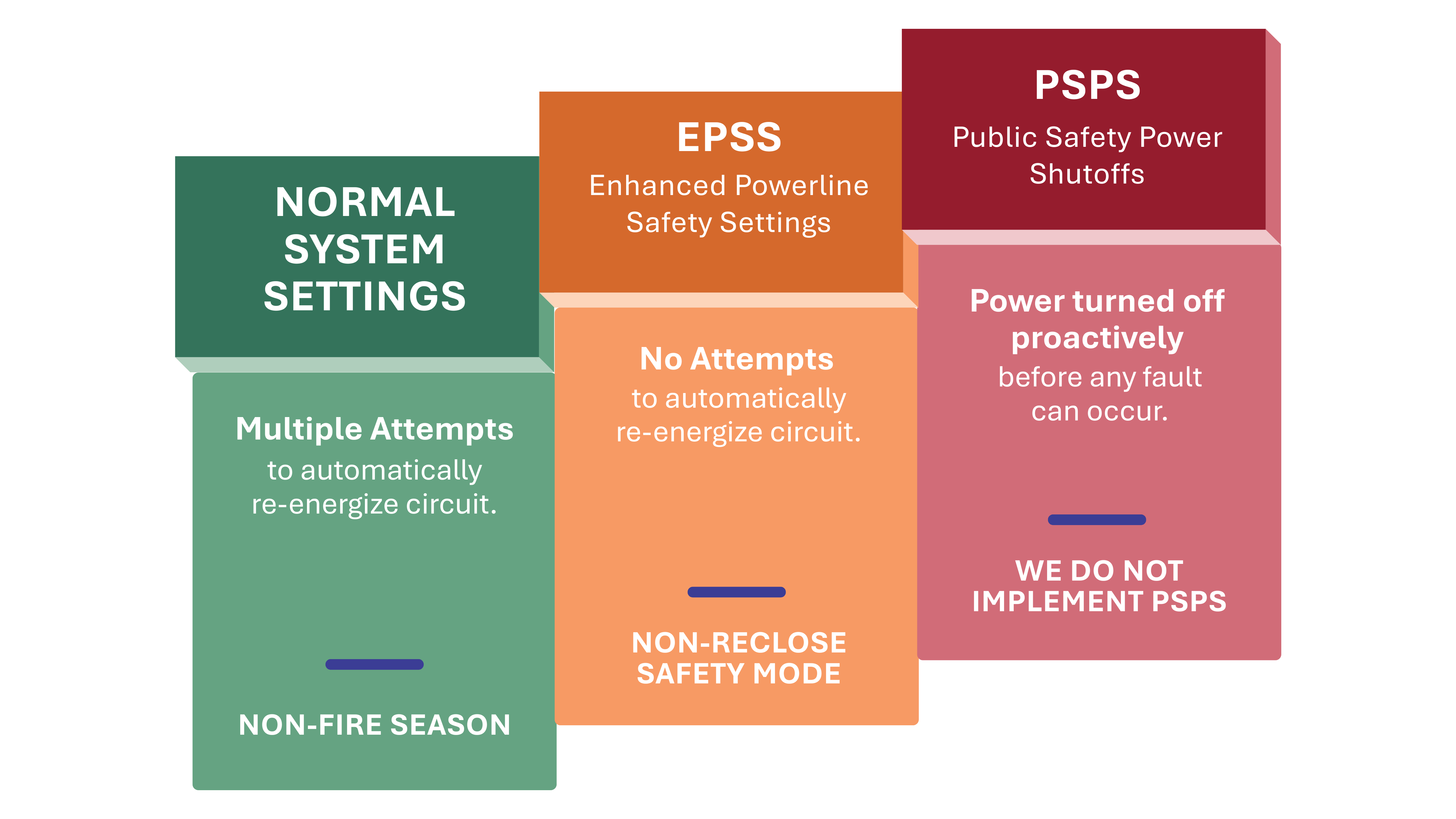
 During extreme conditions, our main goal is to keep our community safe. We deploy EPSS to help prevent wildfires by keeping power lines de-energized—or turned off—if they’ve been damaged or come into contact with trees or wildlife.
Customers will only lose power if there is a direct safety issue, such as a downed line or equipment touching a tree branch. This prevents sparks that could start a fire. If this happens, we will inspect the line before restoring power. Depending on weather and terrain, this process can take four to eight hours. We move as quickly as safety allows.
What to expect
We continuously evaluate our safety protocols to ensure they align with current fire and weather conditions. We activate EPSS during high-risk conditions and deactivate EPSS whenever it is safe to do so to minimize service disruptions.
While the activation of EPSS can cause more frequent unplanned outages, it is a vital tool for preventing wildfires. These safety-driven interruptions will have no impact on your monthly charges.